


The Harbor Maintenance Fee (HMF) is a U.S. Customs and Border Protection (CBP) fee charged on imports arriving at U.S. ports via ocean freight. It was established under the Water Resources Development Act of 1986 to help fund the maintenance and dredging of U.S. harbors and shipping channels.
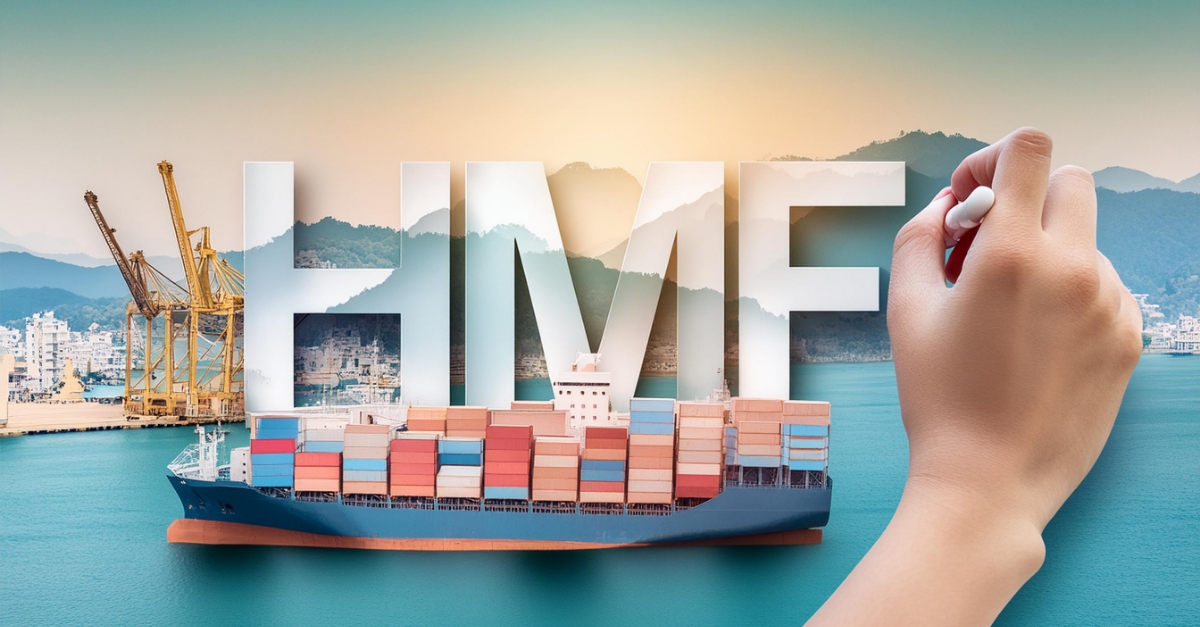
Importers bringing goods into the U.S. by ocean vessel.
Exporters and domestic shippers used to be subject to HMF, but today imports are the primary category paying the fee.
Not applied to air freight, trucking, or rail shipments—only sea freight.
Rate: 0.125% (1/8 of 1%) of the cargo value.
Example: If the customs value of imported goods is $100,000, the HMF is:
100,000×0.00125=125 USD100,000 \times 0.00125 = 125\ \text{USD}100,000×0.00125=125 USD
The fee is collected by CBP at the time of customs entry filing.
Applies to Imports Only – Export cargo is generally exempt.
Not Mode-Universal – Only ocean freight shipments into U.S. ports are subject to HMF.
Customs Entry Requirement – Must be declared and paid along with other duties and fees.
Non-Refundable – Even if goods are later re-exported, the HMF is not reimbursed.
Adds to Landed Cost – Even though the percentage is small, for high-value imports from China or other countries, the HMF can significantly impact total cost.
Compliance Risk – Failing to declare HMF accurately can trigger fines or customs delays.
Forecasting – Importers should always include HMF in landed cost calculations along with duties, tariffs, and MPF (Merchandise Processing Fee).
In summary: The Harbor Maintenance Fee (HMF) is a U.S. government charge of 0.125% of cargo value applied to all ocean freight imports at U.S. ports. It helps fund port infrastructure, and while small per shipment, it’s a cost that importers must include in their total shipping budgets.
 What is a Container YardSeptember 1, 2025What Is a Container Yard (CY)?A Container Yard (CY) is a designated facility within a port, inland terminal, or logistics hub where shipping containers are stored, received, and delivered. It serves a...view
 2025 Amazon Hotlist: Strategic Freight Insights for Chinese Logistics ProvidersApril 7, 2025As a Chinese freight forwarder, understanding emerging Amazon trends is critical to optimising supply chains for cross-border sellers. Below is our revised analysis of 2025’s top-selling, low-competi...view
 What Is a Fumigation Certificate?November 24, 2025A Fumigation Certificate—sometimes called a Pest Control Certificate—is an official document issued by an authorized fumigation service provider confirming that cargo, packaging, or containers have ...view
 What is Full Truck Load (FTL)September 1, 2025What Is Full Truck Load (FTL)?Full Truck Load (FTL) is a freight shipping service where an entire truck is reserved for a single customer’s cargo. Unlike Less-than-Truckload (LTL), where shipments fr...view
 English
  português
  Call us on:
  Email Us:
  International Mayors Exchange Center, No. 55 Shizhou Middle Rd, Nanshan District, Shenzhen Guangdong China
